What Line Superintendents Actually Need from Inspection Software
You're responsible for keeping the lights on. Your crews need clear direction on what needs fixing, where it's located, and how urgent it is. You don't have time to babysit complicated software or wait weeks for inspection reports that should have been on your desk days ago.
Yet most inspection management platforms seem designed by people who've never managed field crews or understood the pace of utility operations. They're packed with features nobody asked for while missing the basic functionality that actually matters.
The Core Problem: Getting from Photos to Field Action
Here's the fundamental challenge with drone inspections: capturing photos is easy, but turning those photos into actionable work orders that reach your crews quickly is surprisingly difficult with most platforms.
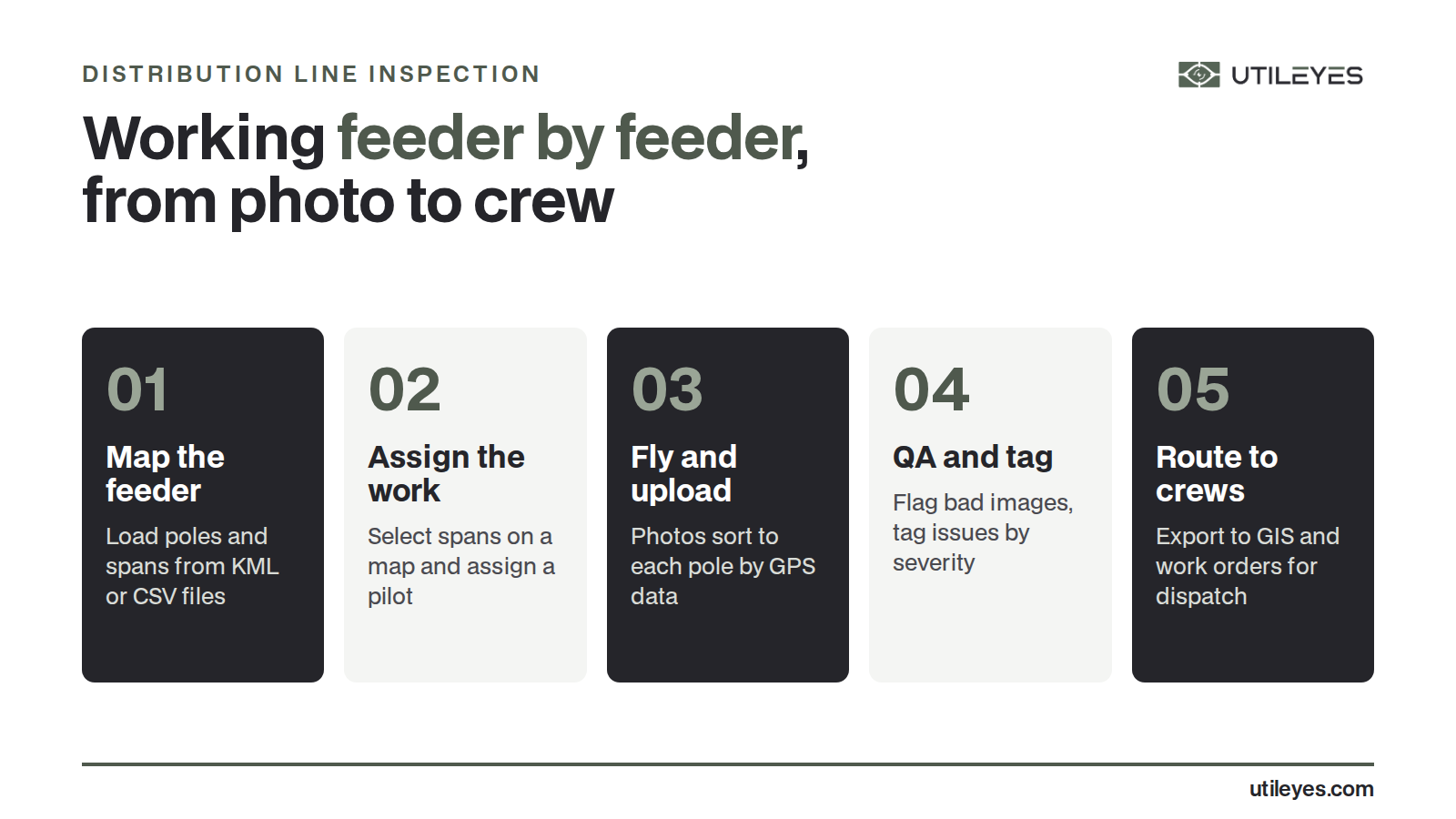
The workflow should be straightforward. Pilots fly the circuit, capture imagery of every pole and span, upload photos to software that organizes them automatically, inspectors review and tag issues, and findings go directly to you for crew dispatch. Start to finish in the same day.
Instead, what typically happens is this: pilots spend hours after flights manually organizing thousands of photos into folders, IT gets involved to upload data correctly, inspectors wait days to receive organized imagery, they complete reviews but findings sit in approval queues, reports eventually get generated but require manual reformatting, and by the time work orders reach your desk it's been two or three weeks since the original flight.
During those weeks, that damaged crossarm or overheated connector you needed to know about stays in the field creating risk.
What Actually Matters: The Non-Negotiable Requirements
From conversations with line superintendents across multiple utilities, these capabilities separate useful platforms from wastes of money:
Speed from Flight to Your Desk
If it takes longer than 48 hours from when the drone lands to when you have actionable findings, the software is too slow. The best platforms can do this in hours or even minutes, not days or weeks.
Ask vendors specifically: "How long does it take from photo upload to when I can dispatch a crew?" If they dodge the question or talk about "it depends on configuration," that's a red flag.
Automatic Photo Organization
Your pilots should upload raw imagery and have the software automatically organize everything by pole location, circuit section, or however you need to see it. If pilots are spending hours creating folder structures and manually sorting files, you're paying someone to do work that code should handle.
GPS metadata exists in every photo. Good software reads that data and organizes accordingly without human intervention.
Clear Severity Ranking
When you look at inspection findings, you need to immediately understand which issues require emergency response, which need attention within days, and which can wait for scheduled maintenance cycles.
Platforms that dump generic finding lists without clear priority classification force you to spend time re-sorting information instead of dispatching crews.
Direct Integration with How You Already Work
You probably already use specific systems for work orders, asset management, or crew scheduling. New inspection software needs to feed data into those existing systems cleanly.
CSV export at minimum. Direct API integration with platforms like ARC GIS, ESRI, or your work order management system is better. The goal is seamless information flow, not manually copying data between systems.
Mobile-Friendly for Field Review
Sometimes you need to review findings while you're already in the field or at a job site. Software designed only for desktop use is useless in those situations.
The platform should work equally well on tablets and phones as it does on office computers.
Intuitive Interface That Doesn't Require IT Support
You have better things to do than constantly call support because the software is confusing or keeps breaking. Your inspectors and crews have better things to do than attend multi-day training sessions to learn basic functions.
If the vendor demo requires extensive explanation of how to perform simple tasks, imagine how frustrating daily use will be.
Why Utileyes Works for Line Superintendents
We built Utileyes based on direct feedback from utility operations teams, including line superintendents who were frustrated with existing platforms. Here's what that means in practice:
15-Minute Photo to Dispatch
While competitors measure workflows in days or weeks, Utileyes handles the complete cycle in about 15 minutes. Pilots upload raw imagery, the system automatically organizes by location, inspectors review through an intuitive interface, they tag findings with severity levels, and you immediately receive exportable reports ready for crew dispatch.
This speed isn't theoretical. It's how the system actually operates for utilities using Utileyes right now.
Built for Real Field Operations
One of our co-founders also co-founded one of the top drone service providers in the country. We understand utility inspection workflows from both sides: what drone operators need and what field operations require.
Every feature exists because operations teams specifically asked for it. We didn't build features we thought would be impressive. We built exactly what line superintendents and their crews need to work efficiently.
No IT Headaches
Utileyes is a modern cloud platform. There's nothing to install, no servers to maintain, no infrastructure requirements. Your IT team doesn't need to be involved except potentially for initial integration with existing systems.
Operations teams manage their own workflows through Utileyes without requiring ongoing IT support.
Actually Simple to Use
When we say Utileyes is easy to use, we mean inspectors are productive within an hour of first login. Pilots can handle uploads with five minutes of instruction. You can review findings and generate exports without referencing documentation.
The interface makes sense immediately because we designed it for people who have field operations to run, not for software developers.
Transparent Pricing and Fast Implementation
You'll know exactly what Utileyes costs before you commit, with no hidden implementation fees or surprise charges later. Most utilities are fully operational within 30 days of contract signing.
We respect that you have operations to run. We're not going to tie you up in six-month implementation projects.
What the Implementation Process Actually Looks Like
Here's the realistic timeline for getting Utileyes operational:
Week 1: Initial Setup
We configure your inspection forms, asset structure, and any specific severity classifications you use. If you're migrating data from existing systems, we handle the import process.
Week 2: User Training
Training sessions total about four hours across all user types. Two-hour session for operations managers covering administration and reporting. One hour for inspectors on the review interface and findings documentation. One hour for pilots on upload procedures and quality checks.
Most people are comfortable using the system by the end of their training session.
Week 3-4: Pilot Program
We recommend starting with a focused area like one circuit or high-priority region. This validates workflows and builds team confidence before full deployment.
Week 5+: Full Operations
Scale across your entire inspection program. Since workflows remain consistent, expansion is straightforward without additional configuration or training.
Making the Business Case to Your Organization
If you're convinced Utileyes or similar focused platforms make operational sense but need to justify the decision to leadership, here's the argument:
Time Savings Translate to Cost Savings
Calculate current time spent on manual photo organization, data management, and inspection workflow administration. Even modest time savings of 10-20 hours per week quickly justify software costs.
Faster Response to Critical Findings
When inspection findings reach you in hours instead of weeks, you can address problems before they cause outages or safety incidents. The avoided cost of even one prevented failure typically exceeds annual software costs.
Better Crew Utilization
Clear, prioritized work orders mean crews spend more time fixing problems and less time figuring out what needs attention or waiting for clarification on vague inspection reports.
Reduced Dependency on External Vendors
Some utilities rely on drone service providers partly because internal data management is too complicated. Better software enables more work to be handled internally, reducing vendor costs over time.
Measurable Operational Improvements
With the right platform, you can demonstrate concrete improvements: inspection cycle times, time from identification to repair, percentage of critical findings addressed within target timeframes. These metrics justify continued investment and program expansion.
The Bottom Line for Line Superintendents
You need inspection software that helps your crews work more efficiently and helps you make faster decisions about what needs attention. Everything else is secondary.
The best platform is the one that gets out of your way and just works. It should handle the technical complexity of organizing and managing drone inspection data automatically, so you can focus on what actually matters: keeping your infrastructure reliable and your crews productive.
Don't get sold on comprehensive platforms promising to revolutionize every aspect of utility operations. Get software that does drone inspections exceptionally well, integrates cleanly with your existing workflows, and delivers findings to you fast enough to actually be useful.
See Utileyes in Action
The best way to understand whether Utileyes solves your operational challenges is to see it working with realistic utility scenarios.
We'll show you the complete workflow from pilot upload through inspection review to crew dispatch, using examples that match your actual operations. Bring your specific questions and we'll demonstrate exactly how Utileyes addresses them.
Have questions about implementation, integration with existing systems, or whether Utileyes fits your specific inspection program? We'll give you straight answers about what the platform does well and whether it's the right solution for your situation.
At Utileyes, we built software for people who have field operations to run and don't have time for complicated platforms that create more work than they eliminate. If that describes your situation, let's talk.