What Your Eyes Can't See Can Still Cause Catastrophic Failures
Visual inspections are the backbone of utility maintenance programs. Trained inspectors identify cracked insulators, corroded hardware, damaged crossarms, and obvious equipment defects. These inspections prevent countless failures every year.
But visual inspections have a fundamental limitation: they only detect problems you can see. Equipment can be failing internally while looking perfectly fine externally. Connections can be overheating dangerously while appearing normal. Insulators can have internal defects causing electrical heating with no visible damage.
By the time these problems become visible, they're often hours away from complete failure.
Thermal inspections identify issues 200-300% earlier than visual inspections. Temperature differences invisible to the naked eye show up clearly in thermal imagery, providing early warning of developing problems before they cause outages or fires.
The Science Behind Thermal Anomaly Detection
Every piece of electrical equipment generates heat during normal operation. Transformers warm up under load. Connections experience some resistance heating. Conductors carry current and generate thermal energy.
These normal temperature increases are predictable and manageable. Equipment is designed to operate within specific temperature ranges and dissipate heat effectively.
Problems occur when something disrupts normal thermal performance.
High-Resistance Connections: Corrosion, loose hardware, or degraded contact surfaces increase electrical resistance. Increased resistance generates additional heat. High-resistance connections often run 30-70°F above normal before visible degradation appears. A connection that should operate 10 degrees above ambient might instead run 40 or 50 degrees hot.
Internal Equipment Defects: Transformer windings with insulation breakdown, bushing internal failures, or switchgear component degradation create localized heating. These defects are completely invisible externally but show clearly in thermal imaging.
Phase Imbalance: When one phase carries disproportionate load compared to the other phases, that conductor and its associated hardware will run hotter than the others. This imbalance can indicate upstream problems or developing faults.
Conductor Damage: Impact damage, corrosion, or strand breakage in conductors creates resistance increases that generate heat at the damaged location.
Thermal cameras detect these temperature differences by measuring infrared radiation. Equipment operating above normal temperatures emits more infrared energy, appearing as bright spots in thermal imagery. The temperature difference between normal and problematic equipment can be quantified precisely, enabling risk-based prioritization.
What Thermal Inspections Reveal That Visual Inspections Miss
The practical value of thermal imaging becomes clear when you consider specific failure modes:
Overheated Transformer Connections
Transformer bushings and connection points are common failure locations. The connection between the bushing and the conductor or between internal transformer components can degrade over time due to thermal cycling, vibration, or corrosion.
This degradation increases contact resistance, which generates heat, which accelerates further degradation in a feedback loop. Eventually the connection fails completely, often during peak load when temperatures are highest.
A visual inspection shows normal-looking hardware. A thermal inspection reveals a connection operating 30-50 degrees above adjacent equipment, flagging it for immediate attention.
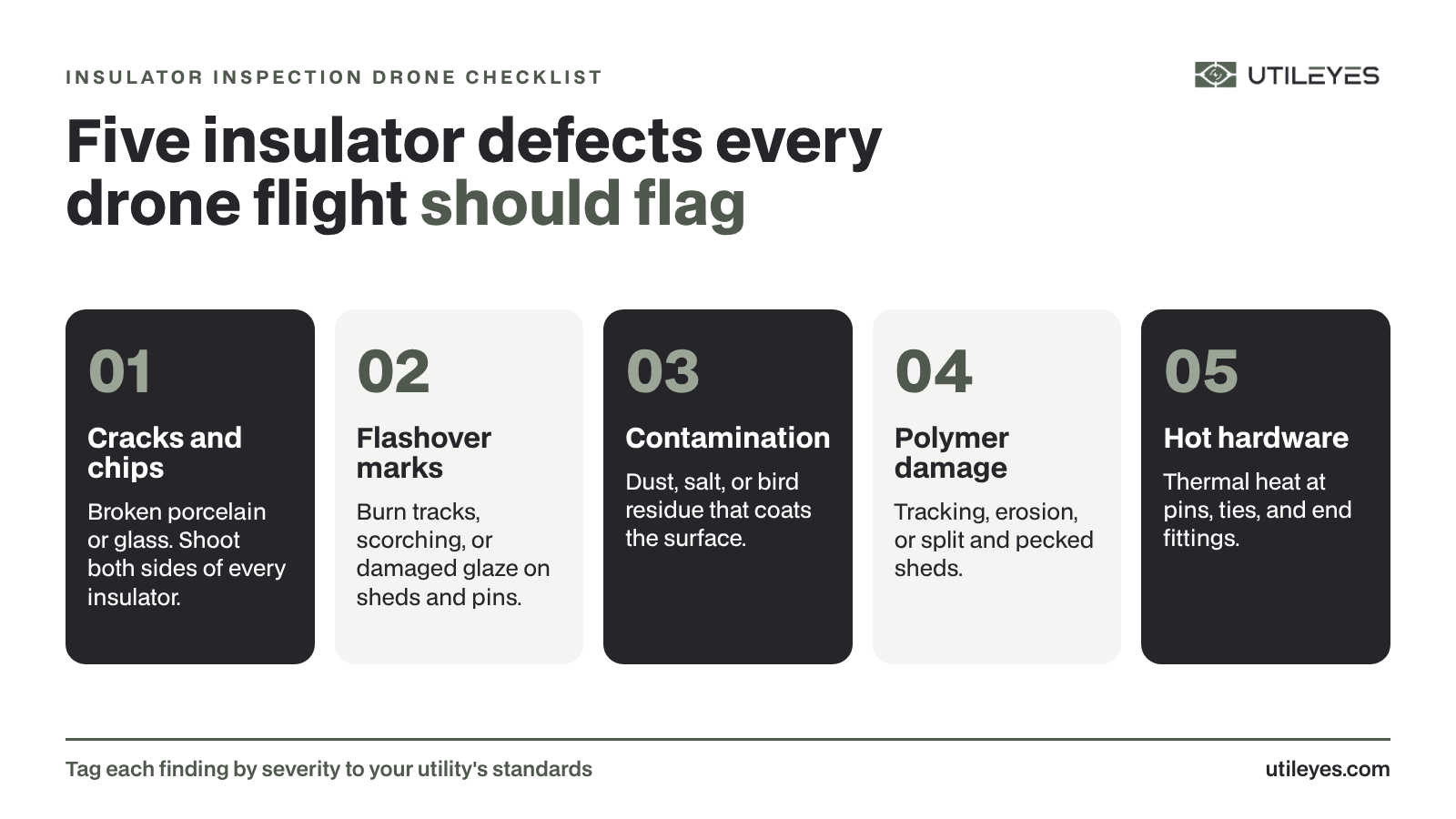
Failing Insulators
Insulators can develop internal contamination, moisture intrusion, or material defects that create current leakage paths. This leakage generates heat within the insulator body.
From the ground or even from a bucket truck, the insulator looks fine. There's no visible cracking, no surface tracking, no obvious damage. But thermal imaging reveals the insulator is significantly warmer than identical insulators on adjacent phases, indicating internal problems.
Corroded or Loose Hardware
Clamps, connectors, and hardware subjected to years of thermal cycling and weather exposure can develop corrosion or work loose. This creates poor electrical contact and resistance heating.
The hardware might look somewhat weathered but not obviously damaged. Thermal imaging shows it's operating far above normal temperature, indicating the connection quality has degraded to the point where replacement is necessary.
Load Imbalance Issues
In three-phase systems, all three phases should carry roughly similar loads and therefore operate at similar temperatures. When thermal imaging reveals one phase consistently running hotter than the others across multiple structures, this indicates load imbalance that needs investigation.
The imbalance might be caused by customer load distribution, upstream transformer tap settings, or developing faults. Regardless of cause, identifying the imbalance early prevents the overloaded phase from experiencing accelerated degradation or failure.
Vegetation Contact Points
Trees or branches in contact with conductors create arcing and resistance heating. During daylight hours with no wind, the contact might be intermittent and not causing obvious problems. But thermal imaging reveals elevated temperatures at the contact location, documenting a fire risk that needs immediate vegetation clearance.
When to Conduct Thermal Inspections for Maximum Value
Thermal imaging is most effective when equipment is under load and operating at temperatures where defects create detectable thermal signatures.
Peak Load Periods: Conduct thermal inspections during summer afternoons when air conditioning load peaks or winter mornings during heating load peaks. Equipment defects generate the strongest thermal signatures when current flow is highest.
Post-Peak Periods: Flying immediately after sustained high-load periods can be even better than during peak load. Equipment retains heat for a period after load decreases, and the thermal signatures of defects remain visible while line crews and operations teams are more available to respond to findings.
Seasonal Programs: Many utilities conduct thermal inspections twice annually, once before summer peak season and once before winter peak season. This ensures equipment enters high-demand periods without known thermal anomalies.
Targeted Inspections: When specific circuits experience unexplained protection operations, power quality issues, or other symptoms suggesting equipment problems, thermal inspections can identify the problematic equipment quickly.
Pre-Storm Preparation: In regions subject to severe weather, thermal inspections before storm season can identify equipment likely to fail during high winds or lightning events. Replacing that equipment proactively prevents failures when restoration resources are already stretched thin.
Why Software Matters as Much as Thermal Cameras
A thermal camera on a drone captures valuable data. But that data only creates value when it reaches the people who can take action, formatted in ways they can understand and prioritize quickly.
This is where many utilities struggle.
Thermal imagery comes back from the field, but then what? How do you organize thousands of thermal images by location? How do inspectors efficiently review thermal data and differentiate between normal operating temperatures and genuine anomalies? How do findings reach operations teams fast enough to prevent failures?
The Challenge of Thermal Data Management
Thermal images contain different information than visual photographs. Each pixel has an associated temperature value. Inspectors need to see both the thermal signature and understand what that temperature means in context.
Is a connection at 85°F (29°C) a problem? It depends. If ambient temperature is 80°F (27°C), then 85°F is completely normal. If ambient is 50°F (10°C), then 85°F indicates significant heating. If adjacent identical connections are at 55°F (13°C), then one at 85°F is clearly anomalous.
Inspectors need software that presents this context clearly. They need to see thermal images, understand temperature differentials, compare readings across similar equipment, and make risk-based determinations about which findings require immediate attention versus monitoring.
Automated Organization of Thermal Imagery
After a day of thermal flights covering 30 miles of circuit and capturing 2,000 images, pilots shouldn't spend hours manually organizing files into folder structures.
Software should read GPS metadata from each thermal image and automatically organize everything by pole location, circuit section, and equipment type. This automatic organization means inspectors can start reviewing thermal data immediately rather than waiting days for manual data preparation.
Inspection Interfaces Designed for Thermal Review
Thermal inspection requires different review workflows than visual inspection. Inspectors need to:
- View thermal and visual imagery side by side to correlate thermal signatures with physical equipment
- Identify temperature differentials between similar equipment on different phases
- Flag thermal anomalies with severity ratings based on temperature differences
- Add contextual notes about ambient conditions, load levels, and equipment history
- Generate reports with thermal images, temperature data, and specific equipment locations
Generic image review tools don't support these specialized workflows well. Purpose-built thermal inspection software streamlines the review process and ensures findings are properly documented.
Rapid Distribution to Operations Teams
The time between identifying a thermal anomaly and informing the operations team responsible for addressing it should be measured in hours, not days or weeks.
During summer peak season, a transformer connection running 45 degrees above normal needs attention before the next heat wave arrives in three days. Software that requires manual report generation, approval workflows, and distribution processes creates dangerous delays.
Platforms designed for rapid workflows enable inspectors to flag critical thermal findings and immediately notify operations teams, ensuring high-priority issues receive urgent attention.
How Utileyes Automates the Hardest Parts of Thermal Review
We built Utileyes specifically to eliminate the delays that plague traditional inspection workflows. For thermal inspections, speed matters enormously because thermal anomalies indicate equipment already in the process of failing.
[Visual representation: Traditional Workflow vs Utileyes Workflow comparison]
Workflow Speed Improvements:
- Photo organization: 3-4 hours manual work → 5 minutes automated
- Quality assurance: 2+ hours manual review → Instant automated flagging
- Inspector assignment: Manual coordination → Automatic notification
- Critical finding distribution: 2-3 days → 15 minutes
- Report generation: Hours of manual formatting → Instant export
Automatic Processing of Thermal Imagery
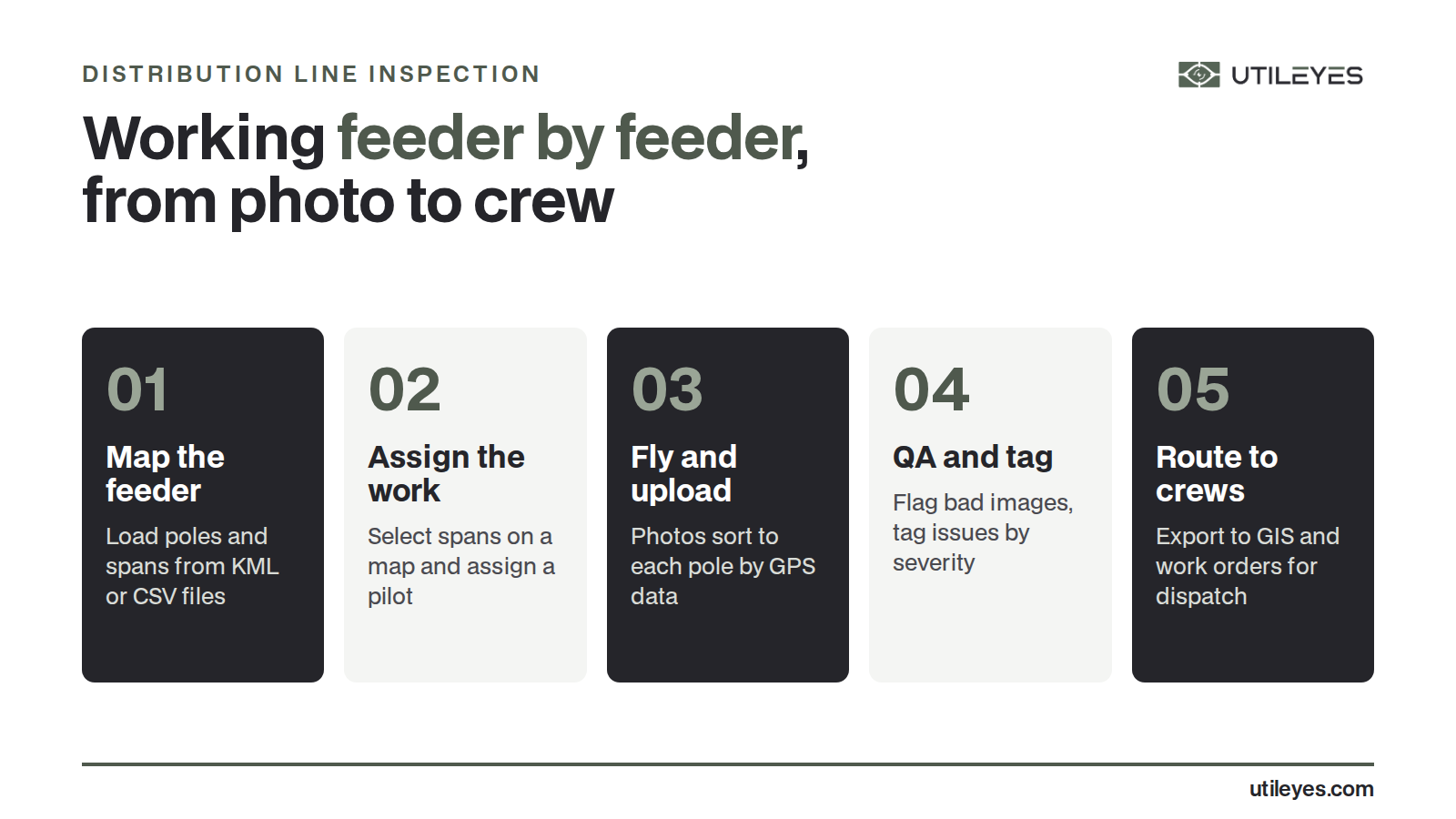
Pilots upload thermal images captured during the day's flights. Utileyes automatically reads GPS data and organizes all imagery by pole location and circuit section. There's no manual file management. Inspectors immediately see organized thermal data ready for review.
Intuitive Thermal Review Interface
Inspectors work through organized thermal image sets, viewing both thermal and visual imagery when available. They tag thermal anomalies, assign severity levels based on your utility's criteria, and document specific temperatures and equipment details.
The interface is designed for efficiency. Inspectors move quickly through normal equipment and spend time on genuine anomalies, not navigating complicated software.
15-Minute Critical Finding Workflow
For high-severity thermal anomalies requiring urgent attention, Utileyes enables inspection-to-notification workflows measured in minutes. Inspector identifies critical thermal issue, tags it as high priority, and operations teams receive immediate notification with all relevant details including thermal imagery, location, and recommended response.
This rapid workflow ensures critical equipment issues reach maintenance teams while there's still time to prevent failure.
Integration with Existing Maintenance Systems
Thermal inspection findings need to flow into work order systems, asset databases, or maintenance management platforms you already use. Utileyes exports thermal inspection data in standard formats and integrates with common utility platforms including:
- GIS Systems: ArcGIS, QGIS, ESRI Collector App
- Work Order Management: Direct CSV export or API integration
- Asset Management: Seamless data synchronization
The goal is seamless information flow from thermal inspection through maintenance execution without manual data re-entry or format conversion. Our GIS interoperability ensures thermal findings are geospatially accurate and immediately accessible in your existing mapping systems.
Building an Effective Thermal Inspection Program
Utilities getting the most value from thermal inspections follow these practices:
Establish Baseline Thermal Data: Conduct initial thermal surveys under known load conditions to establish normal operating temperatures for equipment. These baselines enable you to identify deviations during future inspections.
Inspect During Consistent Conditions: When possible, conduct thermal inspections under similar load and weather conditions across inspection cycles. This makes temperature comparisons more meaningful and anomaly detection more reliable.
Document Load and Weather: Record electrical load levels and ambient weather conditions during thermal flights. This context is essential for interpreting thermal data and distinguishing between normal load-related heating and genuine equipment defects.
Use Temperature Differentials, Not Absolute Values: The most reliable indicator of equipment problems is temperature difference compared to identical equipment on other phases or adjacent structures. A connection 30 degrees warmer than adjacent identical connections is problematic regardless of absolute temperature.
Prioritize Based on Temperature Severity: Not all thermal anomalies require equal urgency. Establish clear criteria for what constitutes critical, moderate, and low-priority thermal findings based on temperature differentials and equipment types.
Close the Loop with Maintenance Verification: After repairs or replacements based on thermal findings, conduct follow-up thermal inspections to verify the issue was resolved and temperatures returned to normal. This confirms the diagnosis was correct and the repair was effective.
The Cost of Not Detecting Thermal Anomalies
Equipment failures that thermal inspections would have caught create several types of costs:
Emergency Repair Costs: Failed transformers, burned connections, and catastrophic equipment failures require emergency response, often during peak demand periods. Emergency repairs cost 2-3 times more than planned maintenance and divert resources from other critical work.
Customer Outage Costs: When equipment fails unexpectedly, customers lose power until repairs are completed. Extended outages damage your utility's reliability metrics and create regulatory exposure. In jurisdictions with performance-based rates, poor reliability directly impacts revenue.
Fire Risk and Liability: Overheated equipment in vegetation-rich areas creates wildfire ignition risk. If utility equipment causes a fire, the liability exposure can be enormous. California utilities have faced billions in wildfire-related claims, many involving equipment failures that thermal inspections might have detected.
System Stress and Cascading Failures: When major equipment fails during peak load, the additional load gets redistributed to other equipment. This can push already-warm equipment into failure, creating cascading outages that are extremely difficult to restore.
Regulatory Penalties: Some jurisdictions impose penalties for reliability performance below established standards. Equipment failures that thermal inspections would have prevented contribute to poor reliability metrics and potential financial penalties.
Compared to these costs, the investment in thermal inspection programs and supporting software is modest. The return on investment from preventing even a single major equipment failure typically exceeds the annual cost of a comprehensive thermal inspection program.
Common Questions About Thermal Inspection Software
Can we use the thermal camera manufacturer's software instead of specialized utility inspection platforms?
Camera manufacturer software is designed for viewing and analyzing individual thermal images. It doesn't solve the organizational challenge of managing thousands of thermal images across hundreds of circuit miles, integrating findings into maintenance workflows, or distributing actionable information to field crews.
How do we train inspectors to interpret thermal data correctly?
Start with manufacturer training on thermography principles and proper thermal imaging techniques. Then provide utility-specific training on your equipment types, normal operating temperatures, and thermal anomaly criteria. Most inspectors become proficient with thermal review within a few weeks of regular practice.
What if we only do thermal inspections on specific equipment types rather than comprehensive circuit surveys?
Targeted thermal inspections of substations, major equipment, or specific problem circuits are valuable and better than no thermal inspection at all. However, thermal anomalies often appear on distribution hardware and connections that you wouldn't specifically target. Comprehensive circuit thermal surveys catch problems you didn't know existed.
How often should thermal inspections be repeated?
For general distribution circuits, annual or semi-annual thermal inspections are common. For critical circuits, high-risk areas, or equipment with known issues, quarterly thermal inspections may be appropriate. The inspection frequency should balance the rate of equipment degradation against inspection costs.
Taking Action on What You Find
Thermal inspection data only creates value when it drives maintenance action. Establish clear protocols for how thermal findings get translated into work:
Critical Thermal Anomalies: Temperature differentials above defined thresholds require immediate investigation and typically emergency repair authorization. These findings go directly to operations for same-day or next-day response.
Moderate Thermal Issues: Elevated temperatures that don't meet critical thresholds but indicate developing problems should be scheduled for repair within days or weeks depending on severity and upcoming weather or load forecasts.
Trending Concerns: Thermal signatures that show equipment warming over multiple inspection cycles indicate degradation that needs monitoring and eventual maintenance even if current temperatures aren't yet problematic.
Verification Inspections: After repairs based on thermal findings, conduct follow-up thermal inspections to confirm temperatures returned to normal and the issue was fully resolved.
The software platform supporting your thermal inspection program should facilitate these workflows, making it easy to classify findings by severity, track repair status, and verify resolution.
Why Utilities Choose Utileyes for Thermal Programs
One of our co-founders also co-founded one of the top drone service providers in the country. We've conducted thousands of thermal inspections and understand both the technical aspects of thermography and the operational realities of utility maintenance programs.
Utileyes was designed to solve the practical challenges utilities face with thermal data management:
- Automatic organization of thermal imagery by GPS location
- Intuitive inspection interface for efficient thermal review
- Rapid critical finding workflows that get urgent issues to operations teams immediately
- Integration with maintenance systems to close the loop from inspection to repair
- Documentation and reporting that supports both maintenance planning and regulatory compliance
We built software for people who need to prevent equipment failures, not for people who want impressive-looking dashboards. The focus is on speed, usability, and actionable results.
Find Equipment Problems Before They Find You
Thermal inspections shift maintenance from reactive to predictive. Instead of responding to failures after they occur, you identify problems while there's still time to address them on your schedule, not during an emergency.
The technology exists. Thermal drones capture excellent data. The question is whether your software infrastructure enables you to translate that data into maintenance action fast enough to prevent the failures thermal imaging reveals.
See how Utileyes processes thermal inspection data and supports rapid workflows from thermal anomaly detection through maintenance notification. We'll demonstrate using thermal scenarios relevant to your equipment and operational priorities.
Have questions about implementing thermal inspection programs, training requirements, or integration with existing maintenance systems? We'll discuss your specific situation and how Utileyes can support your predictive maintenance objectives.
At Utileyes, we help utilities find equipment problems before they become failures. Let us show you how thermal inspection software should work.