The transmission connector failed at 2:47 PM. The fire started at 2:51. Your inspection was scheduled for next week.
That four-minute gap between equipment failure and ignition is the difference between a routine repair and a catastrophic wildfire. For utilities weighing how to scale aerial inspections, the question isn't whether to use drones. It's whether to hire a drone service provider (DSP), build your own internal team, or blend both approaches.
All three paths work. But the right choice depends on your inspection volume, response time requirements, and how much control you need over your data. Let's break down what actually matters.
What Is a Drone Service Provider?
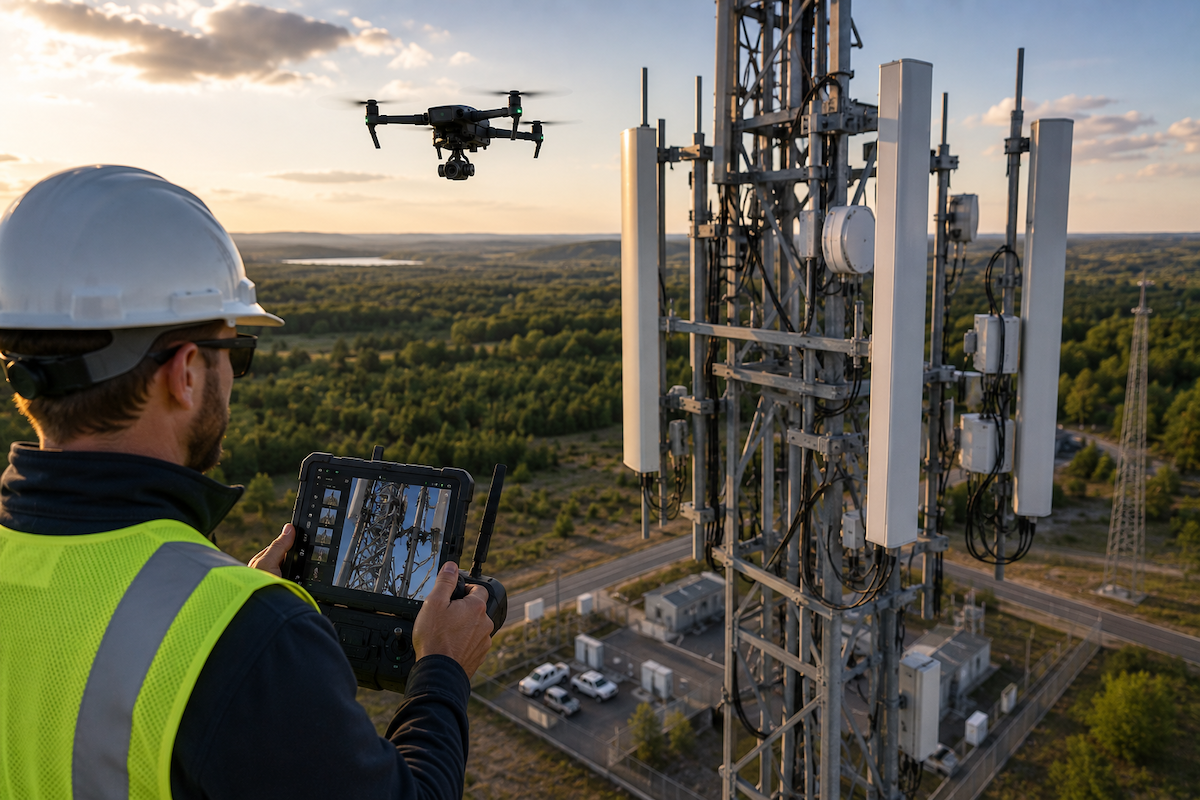
A drone service provider (DSP) is a third-party company that handles aerial data collection for utilities. They arrive with FAA-certified pilots, commercial-grade drones, and specialized sensors—thermal, LiDAR, and high-resolution RGB cameras—ready to fly. Some DSPs offer turnkey inspection services where they fly, process the imagery, and deliver reports. Others focus purely on data capture and leave the analysis to you.
When Outsourcing to a DSP Makes Sense
Hiring a DSP isn't about being unable to fly drones yourself. It's about deploying resources where they matter most.
Lower Upfront Investment
Building an in-house drone program requires capital: drones, sensors, software, training, and ongoing maintenance. A thermal-equipped inspection platform alone can run $15,000 to $30,000. With a DSP, those costs shift to operational expenses you pay per project rather than capital you tie up in equipment.
Immediate Access to Expertise
DSPs bring certified pilots, experienced inspectors, and refined workflows. They've already made the mistakes you'd make in year one. For utilities that need to scale inspections quickly, or handle a one-time project like post-storm damage assessment, that expertise matters.
Regulatory Simplification
Drone operations require FAA Part 107 certification at minimum. More complex work like beyond-visual-line-of-sight (BVLOS) flights requires waivers that can take months to secure. Experienced DSPs often have these approvals already in place, removing a significant administrative burden from your team.
Specialized Equipment on Demand
Need LiDAR for vegetation management? Corona detection for transmission lines? Thermal imaging for hotspot detection? DSPs can bring mission-specific payloads without requiring you to invest in sensors you'll use once a year.
When Building In-House Makes Sense
For utilities with consistent, high-volume inspection needs, internal programs often deliver better long-term ROI. The economics shift when you're flying regularly, not occasionally.

On-Demand Availability
This is the big one. When a storm hits or a red-flag warning goes out, you can't wait for a contractor to become available. Internal teams fly when you need them—same day if necessary. That responsiveness is critical for fire mitigation and outage restoration.
Case in Point: Florida Power & Light's Hurricane Response
Florida Power & Light maintains one of the most mature internal drone programs in the utility sector, deploying over 200 drones across their service territory. During hurricane season, their in-house capability means inspectors are airborne within hours of storm passage—not days. After Hurricane Ian in 2022, FPL's drone teams completed initial damage assessments across affected circuits in under 48 hours, a process that would have taken weeks with ground crews alone. Their average response time from storm clearance to first drone flight: under 4 hours.
Full Control Over Data and Workflow
Your pilots know your assets. They understand which substations have access issues, which circuits are highest priority, and how your maintenance team wants anomalies categorized. That institutional knowledge doesn't transfer easily to outside vendors.
Internal programs also eliminate handoff delays. Data flows directly from flight to inspection to work order without waiting on a third party to process and deliver it.
Long-Term Cost Efficiency
The math favors in-house programs as inspection volume increases. A DSP might charge $150 to $500 per structure inspected. If you're flying thousands of poles annually, those per-unit costs add up fast.
Internal teams have higher startup costs but lower marginal costs per inspection. Cross-training linemen or field techs as drone pilots spreads the investment across your existing workforce.
Quick Comparison: Outsourced, In-House, and Hybrid
Factor
Outsourced DSP
In-House Program
Hybrid Model
Upfront Investment
Low—operational expense
High—capital investment in equipment, training
Moderate—phased investment
Response Time
Days to weeks for scheduling
Same-day capability
Same-day for routine; DSP for surge
Data Control
Dependent on provider formats and timelines
Full ownership and workflow integration
Full control of core data; standardized DSP deliverables
Specialized Equipment
Access to LiDAR, corona detection, etc. on demand
Limited to owned sensors
Best of both—own common sensors, rent specialized
Best For
Utilities flying quarterly or for special projects
High-volume routine inspections; fire-prone regions; rapid-response requirements
Utilities building capability while maintaining flexibility
Watch For
Scheduling delays; data format mismatches; higher per-inspection costs at scale
Pilot currency requirements; equipment maintenance; regulatory compliance burden
Coordination complexity; clear scope definition between internal and external
The Analysis Gap: Who Reviews 10,000 Pole Photos?
Here's the question most utilities underestimate: once you've captured thousands of inspection images, who actually reviews them?
Flying drones is the visible part of the workflow. Image analysis is where programs succeed or stall. A single day of flying can generate 500 to 2,000 images per pilot. Without efficient review processes, that imagery piles up faster than your team can process it.
DSP approach: Some providers include analysis in their deliverables—processed reports with anomalies flagged and categorized. Others deliver raw imagery and leave the review to you. Know which model you're buying before signing a contract.
In-house approach: You'll need dedicated inspection time—either from existing staff or new hires. Many utilities cross-train linemen to review imagery, leveraging their field knowledge to spot issues faster than someone unfamiliar with your assets.
The right inspection software dramatically reduces this burden. Automated photo organization, GPS-based asset matching, and customizable severity tagging can cut review time by 60% or more compared to manual folder sorting and spreadsheet tracking.
Challenges Both Models Share
Regardless of which path you choose, some operational realities affect every drone program:
- Weather windows: Rain, high winds, and extreme temperatures ground drones. Northern utilities may have only 6-8 flyable months; southern utilities face summer heat restrictions.
- Airspace coordination: Flights near airports, heliports, or restricted zones require LAANC authorization or FAA waivers. Even same-day approvals can delay urgent missions.
- Pilot currency: FAA Part 107 certification requires renewal every 24 months. Maintaining proficiency also matters—pilots who fly weekly stay sharper than those who fly monthly.
- Data storage and security: Inspection imagery accumulates fast. Plan for terabytes of data that need secure storage, backup, and retention policies.
How to Decide: A Practical Framework
Your decision should be driven by a few concrete questions—with specific thresholds to guide your thinking:
How often do you need to fly?
Rule of thumb: if you're inspecting 500+ structures monthly, in-house economics usually win. Below that threshold, the overhead of maintaining pilots, equipment, and certifications may not pencil out. Quarterly or project-based inspections often favor DSPs.
How fast do you need response?
When hours matter—post-storm damage assessment, red-flag fire conditions, or urgent outage investigation—in-house teams provide same-day capability. When days are acceptable—routine circuit inspections, annual compliance documentation—DSP scheduling delays matter less.
What's your internal capacity?
Building an in-house program requires someone to champion it—typically an operations manager, line superintendent, or dedicated UAS lead. Without internal ownership, programs stall. If you don't have that champion, start with a DSP while identifying the right person.
How specialized are your inspection needs?
Routine pole inspections with RGB and thermal cameras are straightforward to bring in-house. LiDAR corridor mapping, corona discharge detection, or photogrammetry surveys might justify keeping specialized DSPs on call even if you have an internal program.
The Hybrid Approach: Often the Right Answer
Here's what most decision guides won't tell you: the best programs often combine both models.
A practical hybrid might look like this:
- In-house for routine inspections: Distribution poles, substations, and high-priority circuits where you need consistent coverage and rapid response
- DSPs for specialized missions: Transmission corridor LiDAR surveys, post-disaster surge capacity, advanced analytics
- DSPs for program launch: Start with outsourced inspections while building internal capability, then gradually transition
This approach lets you build competency without betting everything on a brand-new internal program. It also gives you surge capacity for storm response or inspection backlogs without maintaining excess internal headcount.
DSP Success Story: Pacific Gas & Electric's Vegetation Management
Not every utility needs to build in-house. PG&E, facing aggressive wildfire mitigation timelines across tens of thousands of circuit miles, contracted with multiple DSPs to scale LiDAR-based vegetation surveys faster than an internal program could ramp. By coordinating multiple service providers under standardized data requirements, they completed vegetation clearance assessments years ahead of what internal resources alone could achieve. For utilities facing similar scale and urgency, DSPs can be a strategic multiplier.
What About Costs? A Reality Check
Cost comparisons vary widely based on scope and region, but some benchmarks help frame the discussion:
- Drones vs. helicopters: Helicopter inspections can run over $4,000 per day, and some utilities report costs of $10,000 or more for complex operations. Drone inspections typically cost a fraction of that, whether performed by a DSP or in-house team.
- DSP pricing: Service providers typically charge $150 to $500 per structure or $300 to $2,000 per mile, depending on terrain, sensor requirements, and deliverables.
- In-house startup: Expect to invest $25,000 to $50,000 or more to launch a capable program (drones, thermal payloads, software, pilot certification, training). That investment amortizes quickly for utilities inspecting thousands of structures annually.
The real savings from drone utility inspection come from reduced truck rolls, faster anomaly detection, and avoided outages—not just cheaper flights. Factor those operational improvements into any ROI calculation.
Getting Started: Practical Next Steps
Whether you're leaning toward outsourced, in-house, or hybrid, here's how to move forward:
If you're evaluating DSPs:
- Request references from utilities similar to your size and geography
- Clarify data ownership and format—will you get raw imagery, processed reports, or both?
- Understand their response time for unscheduled missions
- Confirm FAA compliance and insurance coverage
If you're building in-house:
- Identify your program champion—someone who can bridge operations, safety, and IT
- Start with a pilot area: one feeder, one substation zone, or your highest-risk circuit
- Choose inspection software that automates photo organization and integrates with your existing systems
- Get 1 to 2 pilots FAA Part 107 certified (online training is widely available and affordable)
- Document SOPs for flight operations, data upload, inspection workflows, and reporting
Ready to Evaluate Your Options?
The DSP vs. in-house debate doesn't have a universal answer. What matters is matching your model to your inspection volume, response requirements, and operational capacity.
Whether you build, buy, or blend both approaches, the right inspection software makes the difference between a program that scales and one that stalls. A platform built for utility workflows with automatic photo organization, GPS-based asset matching, customizable inspection forms, and seamless reporting cuts the time from flight to dispatch dramatically, regardless of who's flying.
Want to see what streamlined inspection workflows look like in practice?
Request a demo to explore how Utileyes simplifies the process from photo capture to crew dispatch whether you're launching a new program, scaling an existing one, or coordinating with external providers.