Most utility operations managers can name the symptoms immediately. Inspection reports that arrive two weeks after the flight. Photo folders that take days to sort before anyone can review them. Anomalies sitting in a queue while planners wait for data to be formatted and routed. Crews dispatched to circuits they know less about than they should, because the last inspection was months ago and the findings never made it cleanly into the work order system.
These are not isolated problems at a few underperforming utilities. They are structural, and they are a direct consequence of how most pole inspection workflows are built. Understanding where the delays come from is the first step to eliminating them.
Where the Time Actually Goes
Utility pole inspection is not a single task. It is a chain of sequential steps, and delays compound at each link. The chain typically looks like this: a pilot or ground crew captures data in the field, someone organizes that data back at the office, an inspector reviews images and logs findings, a report is compiled and routed to planning, a planner creates work orders, and finally a crew is dispatched.
On paper that sounds manageable. In practice, each step carries its own delay. Photo organization after a full day of drone flights can take three to four days when images have to be manually matched to asset records and sorted into folders by structure. Report compilation requires someone to format findings, apply severity rankings, and route the document to the right people. Work order creation involves re-entering data that already exists in the inspection record but lives in a different system.
By the time a lineman receives a work order describing an anomaly, the original image may be two to three weeks old. For routine maintenance that delay is inconvenient. For a failing insulator in a high-fire-threat district, or a compromised conductor heading into storm season, it is a reliability and safety problem.
The Speed Gap Between Field and Dispatch
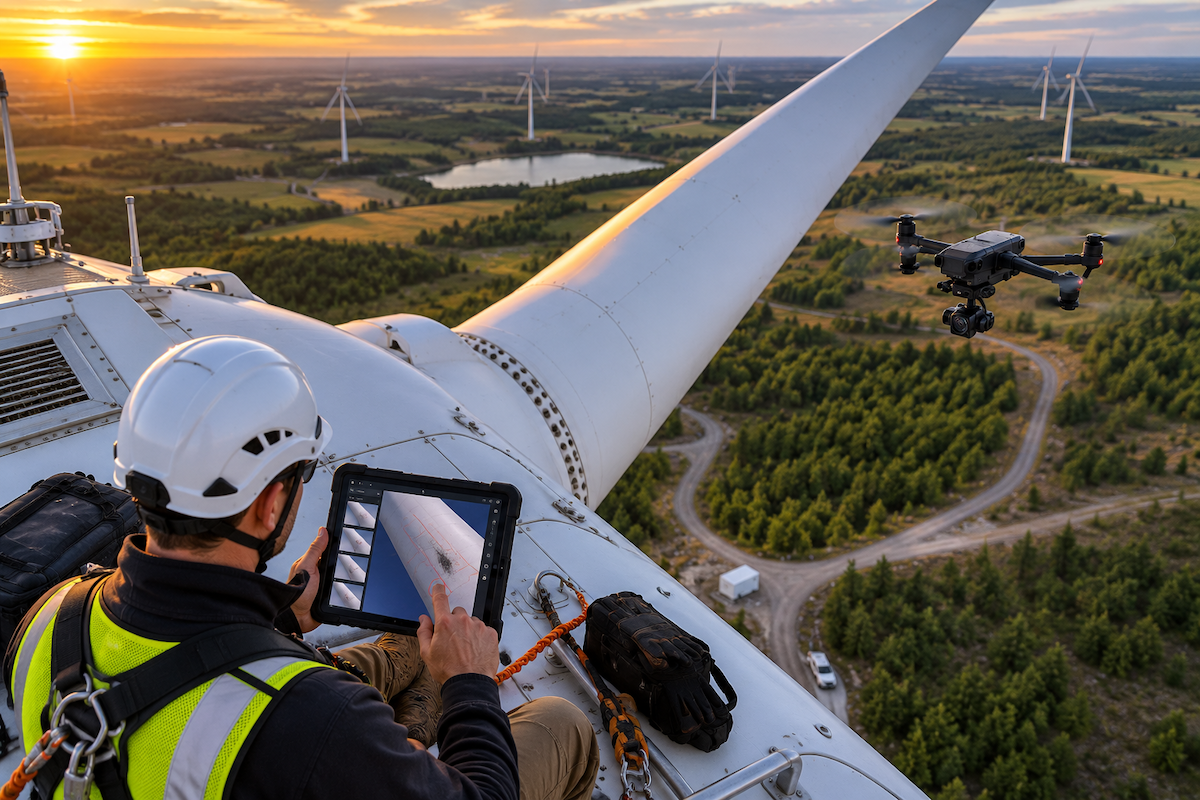
Traditional ground-based inspection methods have their own pace limitations before any software inefficiency is added. Ground crews with bucket trucks typically cover two to three miles of distribution line per day in accessible terrain. Walking patrols move slower. Drone teams, by comparison, cover significantly more line per day while capturing higher-resolution imagery than either ground method, including angles that are inaccessible without climbing.
But the speed advantage gained in the field disappears if the data management workflow cannot keep up. Capturing five times more poles per day than a ground crew means nothing if those images take five times longer to process before they reach the inspection queue.
This is the core problem most utilities face: data collection has improved dramatically, but the workflow between collection and action has not kept pace. The bottleneck has moved from the field to the office.
The Cost of Slow Turnaround
Inspection delays carry direct costs that are easy to underestimate because they show up in secondary budgets rather than the inspection line item.
When anomalies are not acted on quickly, conditions that could have been addressed with routine maintenance become emergency repairs. Emergency crew mobilization, priority materials procurement, and unplanned overtime all cost more than scheduled work. Outage minutes that could have been avoided with faster detection accumulate against reliability metrics that regulators track and customers experience.
In fire-prone regions the stakes are higher still. A thermal anomaly on a connector in a high-fire-threat district is a potential ignition point. Every day between that finding and the repair is a day that risk remains unaddressed. An inspection workflow that takes three weeks from photo to dispatch is not just operationally inefficient. In the right conditions it is a liability.
Where Most Programs Are Losing Time
Breaking down the typical workflow reveals the specific steps where time accumulates:
Photo organization. After a drone flight day, images arrive without structure. Each photo must be matched to its corresponding pole or asset, sorted into the correct folder or system record, and reviewed for quality before inspection can begin. Without automation, this is days of labor per flight day.
QA and mismatch resolution. GPS metadata is not always perfect. Photos occasionally match to the wrong asset, or miss an asset entirely. Identifying and correcting those mismatches manually adds another round of work before the inspection queue is clean.
Inspection and tagging. The review itself takes time proportional to the volume of images and the complexity of the anomaly classification process. Inconsistent forms or vague severity categories slow this step and degrade data quality downstream.
Report generation. In programs that still produce formatted reports as the deliverable, someone has to compile findings, apply consistent formatting, and route the document through review before it reaches operations or planning.
Work order entry. Even after a report is delivered, a planner often has to manually create work orders in a separate system using information already documented in the inspection record.
Every one of these steps is either eliminable or dramatically compressible with the right software.
What Faster Programs Do Differently
The utilities running the tightest inspection workflows share a few common practices.
They use inspection platforms where GPS metadata drives automatic photo organization, so the post-flight sorting step disappears entirely. Images upload, the system matches each photo to its asset record, and the inspection queue is ready the same day as the flight.
They use customizable inspection forms with predefined severity categories, so every inspector tags anomalies in the same structure. That consistency means data can flow downstream without a reformatting step.
They connect inspection findings directly to work order systems and GIS platforms, so the planner does not re-enter data that already exists. A tagged anomaly becomes a work order with a few clicks rather than a manual data transfer.
Utileyes Inspections was built around exactly these principles. The platform was designed based on direct feedback from utilities, line superintendents, and operations teams who described exactly where their workflows were losing time. The result is a system where the time from photos uploaded to a lineman dispatched with a prioritized work order can be under 15 minutes. That is not a marginal improvement over the status quo. It is a structural shift in how fast inspection data becomes field action.
The Drone Speed Advantage, Fully Realized
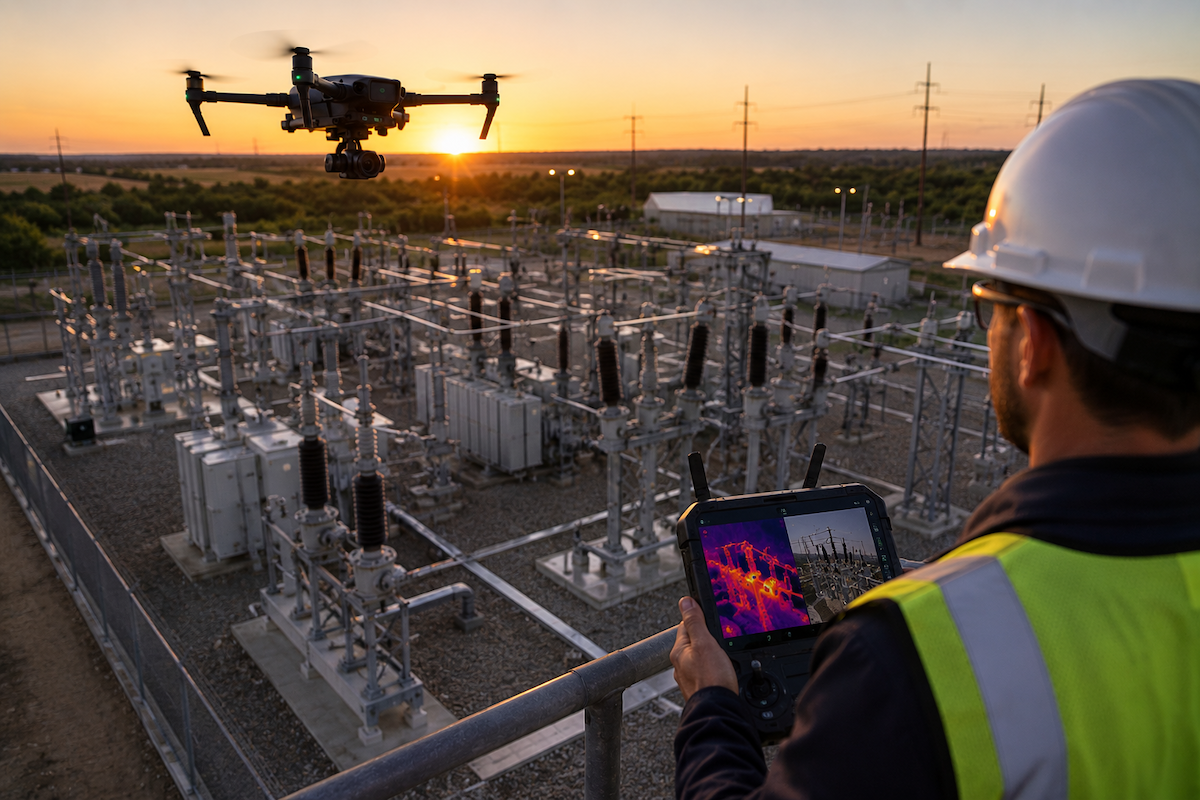
Drone-based pole inspection offers a substantial speed advantage in the field. A drone team can cover significantly more structures per day than ground crews, capture higher-resolution imagery, and do it without requiring bucket trucks, lane closures, or climbing exposure. That advantage is only fully realized when the software workflow can process and act on that volume of data the same day.
A utility flying drones and then waiting two weeks for the data to reach dispatchers is capturing data much faster than its crews can process it. The drone program improves field efficiency while the back-end workflow becomes a growing bottleneck. Adding more flight days to a slow software workflow makes the backlog worse, not better.
The right sequence is: choose software first, confirm the workflow can handle same-day photo-to-dispatch, then scale flight volume. Programs built in this order run efficiently from the start. Programs that add flight volume first and then try to fix the workflow lag behind.
The Questions to Ask About Your Current Program
If inspection turnaround time is a problem at your utility, the diagnostic questions are straightforward:
How long does it take from the end of a flight day to the beginning of inspector review? If the answer is more than a few hours, photo organization is the bottleneck.
How long does it take from a completed inspection to a work order in the field crew's hands? If the answer is more than 24 hours under normal conditions, report generation and work order creation are adding unnecessary lag.
Are inspection findings consistently structured and severity-ranked in a format your work order system can directly consume? If not, there is a translation step somewhere in the chain that is adding time and error.
The answers to those questions identify the specific links in the chain where time is being lost, and they point directly to what needs to change.

Frequently Asked Questions
How many poles can a drone team realistically inspect in a day?
This depends on terrain, circuit density, flight conditions, and the level of detail required per asset. In field use, drone teams have been reported to cover roughly five to eight miles of distribution line per day with high-resolution imagery of each structure. Ground crews with bucket trucks typically cover two to three miles per day in accessible terrain. The field speed advantage is significant. The question is whether the software workflow can process that volume on the same timeline.
Is the photo organization bottleneck really that significant?
Yes. After a full day of drone flights capturing thousands of images, manually matching each photo to its corresponding pole record and organizing them by asset can take three to four days. That single step, before any inspection work begins, is often the largest source of turnaround delay in utility drone programs. Automating it through GPS metadata-based organization eliminates those days entirely.
Our utility uses a vendor for inspection reporting. Does that affect turnaround time?
Vendor-based inspection programs add scheduling and communication delays on top of internal processing delays. When a DSP delivers a formatted report, your team still has to translate that report into work orders in your internal systems. In-house programs with direct software integration between the inspection platform and work order systems eliminate that translation step and the associated lag.
Can we fix turnaround time without replacing our entire workflow?
Often yes. The biggest gains come from addressing the specific bottlenecks rather than overhauling everything at once. Automated photo organization and direct work order export typically produce the most immediate improvement in turnaround time, and both can be implemented without replacing the broader systems your operations team already uses.
What is a realistic target for photo-to-dispatch time?
With purpose-built inspection software and a well-structured workflow, the time from photos uploaded to a work order in a lineman's hands can be under 15 minutes for standard findings. That number is not theoretical. It is what Utileyes Inspections was specifically designed to deliver, based on the operational requirements utilities described when the platform was built.