The Critical Gap Between Data Collection and Operational Value
Utilities are launching drone inspection programs at record pace, capturing thousands of high-resolution images, thermal scans, and LiDAR datasets across their networks. But here's where many programs stall: between the moment a drone lands and when maintenance crews receive actionable work orders, there's a workflow gap that can stretch from hours to weeks.
Without a structured end-to-end workflow, drone programs generate data but fail to deliver operational value. Images pile up in disorganized folders, inspection findings sit in email chains, and the promise of faster response times evaporates in manual handoffs and processing delays.
This is where workflow management separates successful drone programs from those that struggle to scale. Whether you're managing an in-house pilot team or working with a drone service provider, a clear operational workflow ensures your inspection data translates into better asset management, faster repairs, and measurable cost reductions.
The Complete Drone Inspection Workflow: Eight Essential Phases
An effective utility drone inspection workflow moves systematically from mission planning through integration with your asset management systems. Each phase requires clear ownership, defined processes, and the right tools to prevent bottlenecks.

Phase 1: Mission Planning and Assignment
Every inspection begins with planning: defining which assets need inspection, when, and by whom. Operations managers or drone program leads identify priority circuits, feeders, or zones based on maintenance schedules, wildfire risk assessments, or post-storm damage evaluation needs.
Mission planning includes:
- Asset selection using GIS data or circuit maps
- Flight area delineation and airspace coordination
- Pilot or DSP assignment based on availability
- Weather window identification for optimal flight conditions
- Pre-flight safety checks and regulatory compliance verification
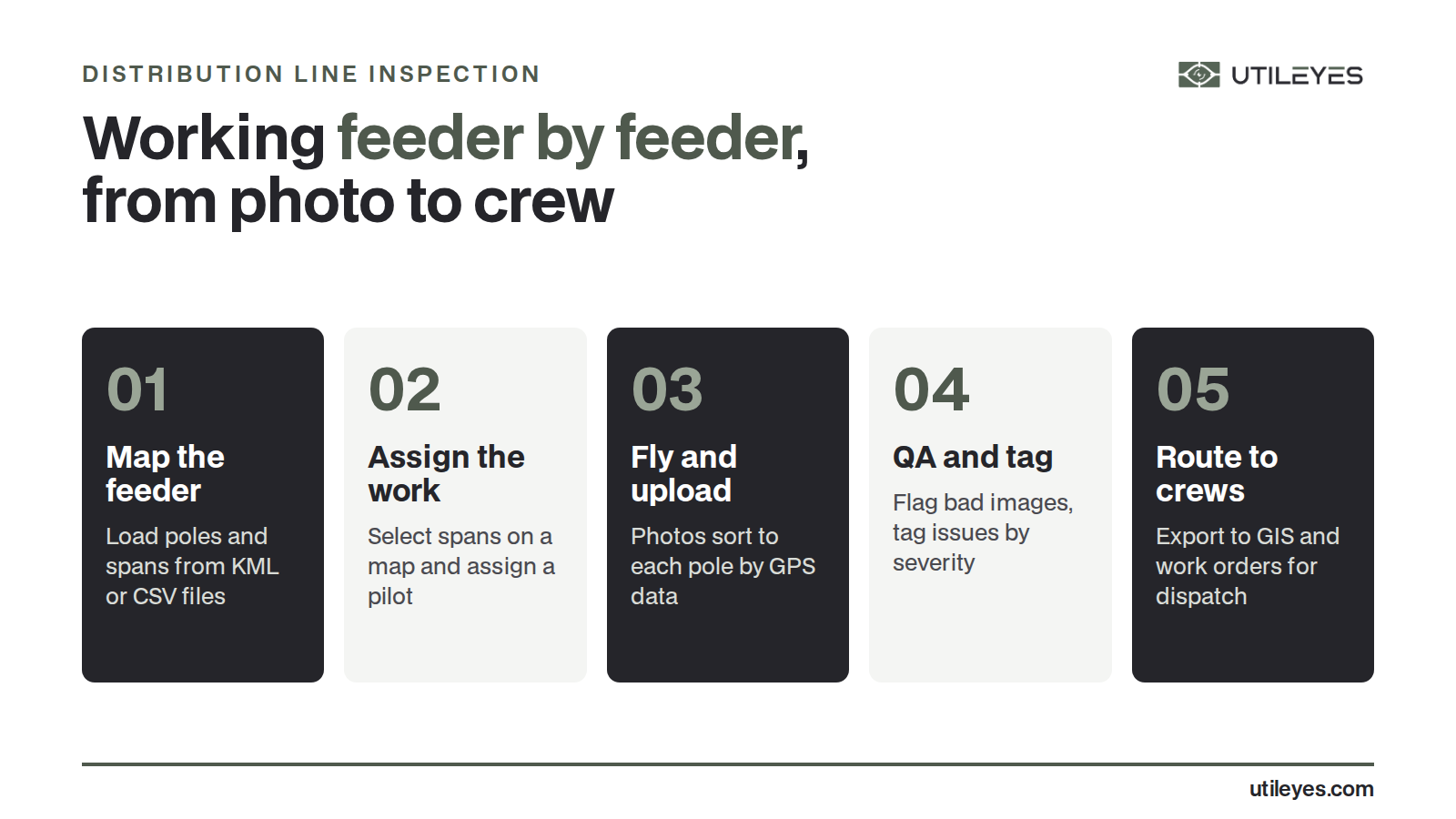
Modern drone inspection platforms like Utileyes automate much of this process. Operations teams can visually select inspection areas on interactive maps, assign flights to specific pilots with a few clicks, and generate flight plans that sync directly to drone controllers. This eliminates the manual coordination that historically consumed hours of administrative time.
Phase 2: Flight Execution and Data Capture
Once mission parameters are set, pilots execute flights following established standard operating procedures. Whether using RGB cameras for visual inspections, thermal sensors for hotspot detection, or LiDAR for vegetation encroachment mapping, consistent data capture practices ensure quality and completeness.
Critical execution elements include:
- Pre-flight equipment checks and battery management
- Systematic flight patterns that provide complete asset coverage
- Multiple angle captures for comprehensive pole or structure documentation
- Real-time image review to catch missing coverage before leaving the site
- GPS metadata tagging for automated asset correlation
Some utilities enable automatic image uploads from the field via cellular connections, allowing near real-time data availability. Others batch upload at the end of each flight day. Either approach works, provided the workflow accounts for it consistently.
Phase 3: Data Ingestion and Upload
After flights, raw data moves from drone storage cards into your inspection management system. This seemingly simple step often becomes a major bottleneck when handled manually. Pilots spending hours organizing folders, renaming files, and matching images to asset IDs wastes the time savings drones were meant to create.
Purpose-built utility drone software eliminates this friction. Platforms like Utileyes automatically recognize GPS metadata from images, match photos to assets in your network database, and organize everything by structure, feeder, or circuit. What once took 3-4 days of manual sorting now happens in minutes.
During ingestion, the system should:
- Validate image quality and completeness
- Flag mismatched or unassigned photos for quick review
- Create standardized folder structures for archiving
- Maintain chain of custody for compliance documentation
- Generate upload confirmations for pilot accountability
Phase 4: Processing and Analytics
Once data is ingested, inspection analysts begin detailed review. This phase transforms raw images into actionable intelligence. Depending on inspection type, processing involves different analytical approaches:
For visual inspections:
- Reviewing pole conditions, hardware integrity, and structural issues
- Comparing current state against historical images to track degradation
- Identifying vegetation encroachment or wildlife nesting
For thermal inspections:
- Analyzing temperature differentials on connectors and conductors
- Flagging hotspots that indicate loose connections or overloaded circuits
- Prioritizing anomalies by severity based on temperature thresholds
For LiDAR processing:
- Measuring clearance distances for vegetation management
- Creating 3D models for engineering analysis
- Calculating span sag and conductor height
Modern inspection platforms support customizable tagging workflows. Analysts can mark anomalies with severity rankings (critical, moderate, low), assign defect codes that match your asset management system, and add detailed notes that guide maintenance crews. Some systems integrate AI-assisted detection to pre-flag potential issues, dramatically reducing review time while maintaining quality.
Phase 5: Deliverable Creation
After analysis, findings must be packaged into formats that different stakeholders can use. This isn't about creating static PDF reports, though those have their place. Effective deliverables provide structured data that flows into existing utility systems.
Key deliverable types include:
- Anomaly reports with GPS coordinates, defect codes, and priority rankings
- CSV exports that import directly into CMMS or work order systems
- Interactive maps showing inspection coverage and identified issues
- Thermal analysis summaries for engineering review
- Regulatory compliance documentation for fire mitigation programs
- Executive dashboards summarizing program metrics
Platforms like VOLT Inspections specialize in utility drone data management, offering standardized deliverable formats that utilities need for regulatory reporting and asset management integration. The goal is creating outputs that require minimal manual reformatting before they're actionable.
Phase 6: Integration with Utility Systems
The most critical and often most overlooked phase is connecting inspection findings to the systems that drive field work. Drone inspection data needs to flow into your GIS, CMMS, and work order platforms to actually drive operational decisions.
Integration approaches vary by utility:
- Direct API connections between inspection software and asset management systems
- Automated CSV imports that update asset condition records
- Web service calls that create work orders from flagged anomalies
- GIS layer updates that show inspection status and findings
Utileyes Inspections was purpose-built with this integration need in mind, offering export formats compatible with common utility platforms and customizable field mappings to align with existing asset databases. Some utilities take integration further, building automated workflows that route critical findings directly to maintenance supervisors without manual handoffs.
Without proper integration, inspection data becomes siloed. It's accessible only to the drone program team rather than informing broader operational decisions. This undermines ROI and prevents the program from reaching its full potential.
Phase 7: Archiving and Metadata Management
Drone inspections generate massive data volumes. A single day of flights might produce thousands of high-resolution images and gigabytes of thermal or LiDAR data. Managing this growing archive requires thoughtful approaches to storage, metadata, and retrieval.
Essential archiving practices include:
- Cloud or network storage with appropriate access controls
- Metadata tagging by date, location, asset ID, and inspection type
- Version control for repeat inspections of the same assets
- Retention policies aligned with regulatory requirements
- Secure backup procedures to prevent data loss
- Search functionality that allows quick retrieval by multiple criteria
As drone programs scale from hundreds to thousands to tens of thousands of inspected assets annually, searchable metadata becomes the difference between useful archives and digital landfills. Utilities need to find specific images from months or years earlier (whether for damage investigations, regulatory inquiries, or engineering analysis) without manually scrolling through thousands of files.
Phase 8: Review and Continuous Improvement
The final phase closes the loop by evaluating workflow performance and identifying optimization opportunities. Leading utilities treat their drone programs as living systems that require regular assessment and refinement.
Quarterly review practices include:
- Analyzing key performance metrics against targets
- Identifying bottlenecks in data processing or deliverable turnaround
- Gathering feedback from pilots, analysts, and maintenance crews
- Updating SOPs based on lessons learned
- Benchmarking against industry standards
- Planning technology or process upgrades
This continuous improvement mindset prevents programs from stagnating and ensures workflows evolve as inspection volumes grow and operational needs change.
Key Performance Indicators for Utility Drone Programs
To manage workflows effectively, utilities need clear metrics that reveal where the process excels and where it struggles. These KPIs provide objective measures of program health:
Operational efficiency metrics:
- Number of assets inspected per flight day
- Time from flight completion to data upload
- Average inspection review time per asset
- Deliverable turnaround time (flight to work order creation)
- Pilot utilization rate (flight hours versus available hours)
Quality and impact metrics:
- Percentage of assets with complete coverage (no missing angles)
- Number and severity of defects identified
- Cost per inspection cycle compared to traditional methods
- Reduction in unplanned outages following drone inspections
- Emergency response time improvements
Program scale metrics:
- Total circuit miles or structures inspected annually
- Coverage frequency (how often each asset is inspected)
- Data storage volume and growth rate
- Integration success rate (findings that flow automatically to work orders)
Many utilities start by tracking 5-8 core metrics, expanding their dashboard as the program matures. The key is establishing baseline measurements early and reviewing trends quarterly to guide workflow improvements.
The Software Foundation: Why Purpose-Built Tools Matter
Generic file storage systems, basic photo management apps, and spreadsheet-based tracking simply can't support efficient utility drone inspection workflows. The unique requirements (GPS-based asset correlation, integration with utility systems, customizable anomaly tagging, thermal image processing, compliance documentation) demand purpose-built platforms.
Software like Utileyes Inspections addresses these specific needs. The platform handles the entire workflow from mission assignment through deliverable creation, with features designed around how utilities actually operate:
- Visual mission planning using interactive network maps
- Automated photo organization by GPS location and asset ID
- Built-in quality assurance that flags incomplete coverage
- Customizable inspection forms aligned with utility defect codes
- One-click export to CSV formats compatible with CMMS and GIS systems
- Role-based access supporting different team responsibilities
Similarly, specialized platforms like VOLT focus on data management challenges utilities face: handling massive image libraries, maintaining searchable archives, and providing the retrieval speed operations teams need when investigating specific assets or responding to incidents.
Investing in the right software foundation isn't an optional enhancement. It's the difference between a drone program that delivers consistent value and one that generates data without driving operational improvement.
Moving from Data Collection to Operational Excellence
Launching a drone inspection program is the first step. Building workflows that transform raw imagery into better asset management, faster response times, and measurable cost reductions is where lasting value emerges.
The utilities seeing the strongest ROI from drone programs share common characteristics:
- They've documented clear workflows with defined roles at each phase
- They've invested in purpose-built software that automates manual processes
- They've established integration with existing utility systems rather than creating data silos
- They track KPIs and regularly review workflow performance
- They treat their drone programs as evolving systems requiring continuous refinement
Without these workflow fundamentals in place, drone programs become expensive experiments that generate impressive imagery without delivering proportional operational value. With proper workflow management, the same programs transform into strategic assets that fundamentally improve how utilities inspect, maintain, and manage their infrastructure.
Take Action: Audit Your Workflow and Close the Gaps
If you're running a utility drone inspection program (or building one), dedicate time this quarter to workflow assessment. Map your current process from mission planning through maintenance action. Time each phase. Identify where handoffs fail and bottlenecks emerge.
Then prioritize the two most impactful improvements and implement them over the next 90 days.
Maybe that's adopting inspection software that automates photo organization. Maybe it's creating standardized deliverable templates that eliminate reformatting work. Maybe it's establishing direct integration between inspection findings and work order systems.
Small workflow improvements compound into significant operational gains.
Utilities that commit to continuous process refinement see their drone programs evolve from interesting technology experiments into essential operational capabilities that deliver measurable value year after year.